
Taylor’s Takes: A changing view on the death penalty
As I grow older (and hopefully wiser), I don’t see much sense in the death penalty at all.

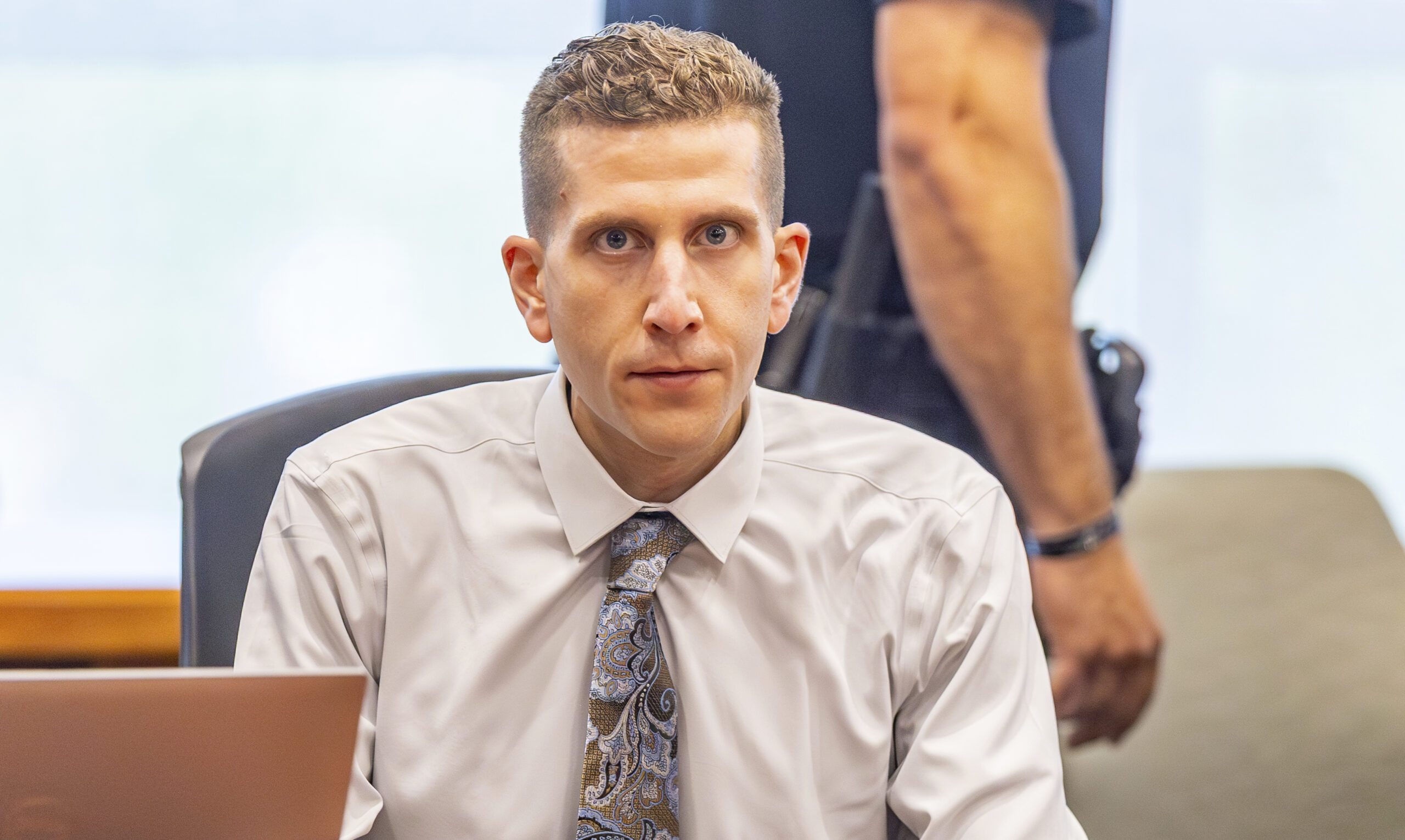
Several weeks ago, Grace and I had a brief conversation on air after the judge in the Brian Kohberger murder case agreed to accept a plea deal from the defendant. Kohberger would avoid the death penalty in exchange for four consecutive life sentences without parole.
Our conversation was based around whether the families were robbed of justice by the judge’s acceptance of the deal.
On one side, it can be argued that there is no truer form of justice than a life for a life. Kohberger viciously killed four Idaho college students without any apparent reason. The survivors and family members of the victims would have been completely justified to call for an end to Kohberger’s life as payment for the ones he snuffed out.
A younger me would absolutely agree with that premise. I used to be all for capital punishment in the service of justice. And there was no middle ground for me, either. You take a life, you give yours up. That’s the end of it.
As I grow older (and hopefully wiser), I don’t see much sense in the death penalty at all.
I do still agree that being sentenced to death is a fitting form of justice. I can’t argue against the equal repayment of life for one or multiple taken against their will.
However, if I were the surviving family member of someone who was brutally murdered, I’m not sure how much solace it would bring me for the killer to be executed.
No, I’m not turning into a bleeding heart liberal. But if I take some time to think about it, I find myself quite doubtful that the death of a murderer would make my life easier to live.
I would still deal with the pain of loss on a daily basis. I would still miss my loved one terribly and think of the tragic way they were taken from me. I don’t think I’d be comforted at all if I knew that the person who took them away from me was on death row.
In fact, I think that pain would only be prolonged as I awaited the day my loved one’s killer met his maker. And that would take decades.
The average time a convicted murderer spends awaiting their final day on earth is just over 20 years.
Not only is the killer left in limbo through 20 years of appeal after appeal, but so am I. Emotionally attaching myself to someone else’s fate at the hands of the American justice system is asking for a prolonged roller coaster ride of emotions.
I would not want to put myself through decades of an endless loop of hope, disgust, disappointment, relief, etc., every time a new appeal was made, then lost, or God forbid, won.
Then there is the more rational, less emotional side of me that comes to the same conclusion, but from a financial standpoint.
A life sentence for an inmate averages between $1 million and $2.2 million. That’s a lifetime of housing, food, and basic services.
The average cost of implementing the death penalty in the United States hovers around $3 million. Because of the endless cycle of appeals, more legal costs are incurred. The state has to cover the cost of the court and prosecutors throughout the entire average 20-year process of appeals, along with paying for the routine costs of housing an inmate for that time.
Financially, it makes more sense for a murderer to sit in prison and rot for the rest of their natural life.
With all of that said, I may feel completely different if I were to ever find myself in such a situation. God forbid. But I’d like to think that after I’ve grieved my loss, I would come to my senses and reach the same conclusion I’ve described here.